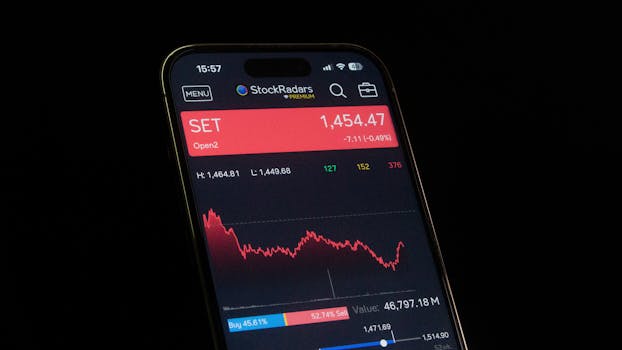

Imagine a bustling marketplace. Orders, bids, and asks fly back and forth like hurried conversations. For an algorithmic trader, this isn’t just noise; it’s the very fabric of the market, a complex ecosystem known as market microstructure. Ignoring its nuances is akin to a chef trying to cook without understanding their ingredients. The impact of market microstructure on algorithmic trading strategies is profound, often dictating the difference between a profitable execution and a costly slip.
For years, many algorithmic models focused primarily on price action and statistical correlations. While these remain foundational, a deeper understanding of how trades are actually executed – the mechanics of the exchange – has become paramount. This is where market microstructure steps onto the stage, revealing the often-unseen forces that can either propel a strategy to success or drag it down.
Decoding the Exchange: What Exactly is Market Microstructure?
At its core, market microstructure is the study of the process and outcomes of exchanging assets at specific prices. It delves into the details of how trading occurs. Think about it: it’s not just about whether a stock is going up or down, but rather how the mechanism of buying and selling influences those movements and the costs associated with them.
Key elements include:
Order Book Dynamics: How buy and sell orders are placed, prioritized, and matched.
Liquidity: The ease with which an asset can be bought or sold without significantly affecting its price.
Transaction Costs: The explicit costs (like commissions) and implicit costs (like slippage) of trading.
Information Asymmetry: Differences in information available to market participants.
Market Impact: How a single trade can influence the price of an asset.
Understanding these elements is not just academic; it’s a practical necessity for anyone deploying automated trading systems.
Liquidity: The Lifeblood of Fast-Paced Trading
Let’s talk about liquidity. In a liquid market, there are plenty of buyers and sellers ready to trade. This means you can execute a large order quickly without dramatically shifting the price. For algorithmic traders, especially those executing high-frequency strategies, liquidity is king.
High Liquidity: Generally allows for tighter bid-ask spreads and less slippage. Your algorithms can get in and out of positions efficiently, minimizing unseen costs.
Low Liquidity: Can lead to wider spreads and significant slippage, especially for larger orders. An algorithm designed for a liquid market might perform disastrously in a thinly traded asset, eating away at profits before the strategy even has a chance to work.
I’ve often found that algorithms that perform brilliantly in backtests on historical liquid data can falter when deployed live in less liquid environments. The impact of market microstructure on algorithmic trading strategies here is stark; it’s about matching the strategy’s execution needs with the market’s ability to absorb those trades.
The Bid-Ask Spread: More Than Just a Price Difference
The bid-ask spread is the difference between the highest price a buyer is willing to pay (bid) and the lowest price a seller is willing to accept (ask). It’s a fundamental measure of liquidity. For an algorithmic trader, this spread represents an immediate cost of entry and exit.
Consider a simple market-making algorithm. Its profit is directly derived from the spread. However, the width of that spread is heavily influenced by microstructure factors like:
Order Flow Imbalance: If there are significantly more buy orders than sell orders (or vice versa), the spread will likely widen as market makers adjust to the imbalance.
Volatility: Higher volatility often leads to wider spreads as market makers demand more compensation for the increased risk.
Information Flow: News or significant announcements can cause rapid changes in order flow, impacting the spread dynamically.
Strategies that rely on capturing small price movements, like scalping, are particularly sensitive to the bid-ask spread. A few extra ticks of spread can turn a winning trade into a losing one.
Market Impact: The Ripple Effect of Your Trades
Every trade, no matter how small, has a market impact. This is the change in price caused by the execution of a trade. For institutional traders and algorithms executing large volumes, this is a critical concern. A poorly managed large order can move the price so adversely that it erodes any potential profit from the trade itself.
Algorithmic Execution Techniques: This is where sophisticated algorithms shine. Techniques like:
Volume-Weighted Average Price (VWAP): Aims to execute orders at the average price over a period, breaking down large orders into smaller chunks.
Time-Weighted Average Price (TWAP): Spreads orders evenly over a specified time.
Implementation Shortfall (IS): Aims to minimize the difference between the decision price and the average execution price of an order.
Understanding Order Book Depth: Knowing how many resting orders are on either side of the current market price helps traders estimate the potential market impact of their own orders.
The impact of market microstructure on algorithmic trading strategies here is about designing execution algorithms that are intelligent enough to navigate these price impacts, minimizing their own footprint.
High-Frequency Trading (HFT) and Microstructure: A Symbiotic Relationship
High-Frequency Trading strategies are perhaps the most acutely sensitive to market microstructure. These strategies often involve:
Extremely Short Holding Periods: Trades are often held for milliseconds or microseconds.
Sophisticated Algorithms: Relying on complex mathematical models and high-speed data analysis.
Proximity to Exchanges: Co-locating servers to minimize latency.
For HFT firms, understanding the granular details of order flow, latency, and exchange matching engine behavior is not just important; it’s their entire business. They exploit tiny inefficiencies and arbitrage opportunities that are only visible when you drill down into the very microstructure of the market. Their strategies are often designed around the microstructure, looking for predictable patterns in order book dynamics or exploiting temporary liquidity vacuums.
Beyond Price: Incorporating Microstructure into Your Strategy Design
So, how can you better account for the impact of market microstructure on algorithmic trading strategies?
- Data Granularity: Use tick-level data where possible to analyze order book dynamics, not just closing prices.
- Backtesting Enhancements: Incorporate realistic transaction costs, including estimated slippage and spread capture, into your backtesting process. Simulate market impact for larger orders.
- Adaptability: Develop algorithms that can dynamically adjust their execution parameters based on prevailing market liquidity and volatility.
- Execution Algorithms: If you’re trading larger sizes, leverage or build sophisticated execution algorithms that actively manage market impact.
- Exchange Specifics: Understand the unique rules and matching engines of the exchanges you trade on, as these can vary significantly.
The truth is, the market is a dynamic, interconnected system. While macroeconomic factors and fundamental analysis provide the broad strokes, market microstructure provides the fine details that can make or break an algorithmic trading strategy. It’s about understanding the dance, not just the dancers.
Final Thoughts: The Unseen Architect of Your Trades
As algorithmic trading continues to evolve, the focus will inevitably deepen on the mechanics of the market itself. The impact of market microstructure on algorithmic trading strategies is not a fringe concern; it’s becoming a central pillar of success. By understanding and adapting to the intricacies of liquidity, spreads, market impact, and order flow, traders can build more robust, efficient, and ultimately, more profitable systems.
The question then becomes: Are you building your strategies on a solid foundation of market mechanics, or are you leaving critical profit opportunities to chance?