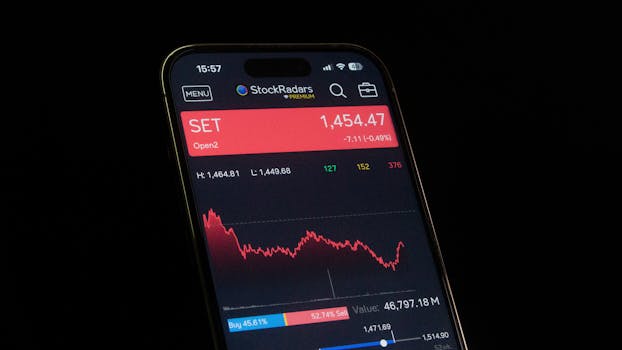

Have you ever stopped to consider what truly makes a stock market “efficient”? We often think of efficiency in terms of how quickly prices reflect new information, a concept popularized by the Efficient Market Hypothesis. But what if the devil, or rather, the efficiency, lies not just in the broad strokes of economic news, but in the microscopic details of how trades actually happen? This is where the fascinating field of market microstructure steps in, offering a lens through which we can scrutinize the very plumbing of financial exchanges and understand The Role of Microstructure in Stock Market Efficiency.
It’s easy to get swept up in the macroeconomics – interest rates, inflation, geopolitical events – and assume that’s the whole story. Yet, beneath the surface, a complex dance of buyers and sellers, order types, and trading platforms is constantly at play. These intricate mechanisms, often invisible to the casual observer, profoundly influence price discovery, liquidity, and ultimately, the efficiency of the entire market. Let’s delve into this intricate world.
Deconstructing the Trade: What Exactly is Market Microstructure?
At its core, market microstructure is the study of the process and outcomes of exchanging assets under specific trading rules. It’s not just about what is traded, but how it’s traded. Think of it as dissecting the anatomy of a transaction. Key elements include:
Trading Mechanisms: Are trades executed through continuous auctions, discrete call auctions, or perhaps a dealer market? Each has its own implications for price formation and volatility.
Information Asymmetry: Who knows what, and when? The disparity in information between different market participants is a cornerstone of microstructure research.
Transaction Costs: This includes not only explicit costs like brokerage fees and taxes but also implicit costs such as the bid-ask spread and market impact.
Order Flow: The sequence and type of buy and sell orders submitted to the market offer valuable clues about underlying sentiment and potential price movements.
Understanding these granular components allows us to ask deeper questions about market behavior and identify potential friction points that might hinder true efficiency.
The Bid-Ask Spread: A Microscopic Barrier to Perfect Information?
One of the most fundamental concepts in market microstructure is the bid-ask spread – the difference between the highest price a buyer is willing to pay and the lowest price a seller is willing to accept. While seemingly a simple cost, it’s a rich area of study. A wider spread, for instance, can indicate higher risk for market makers or a less liquid market.
From an efficiency perspective, a persistently wide bid-ask spread could suggest that information isn’t being incorporated into prices as rapidly as it could be. Market makers, tasked with providing liquidity, demand compensation for the risk of trading against informed participants. If this compensation is too high, it can deter trading, slowing down the price discovery process. I’ve often found that the dynamics of this spread are a sensitive barometer of underlying market health.
Liquidity: The Lifeblood of an Efficient Market
Market liquidity refers to the ease with which an asset can be bought or sold without significantly affecting its price. It’s directly linked to the bid-ask spread and the depth of the order book (the list of buy and sell orders at various prices). A highly liquid market is generally considered more efficient because it allows large trades to occur with minimal price disruption, ensuring prices more accurately reflect intrinsic value.
How does microstructure influence liquidity? Consider high-frequency trading (HFT). While often controversial, HFT firms can contribute to tighter bid-ask spreads and deeper order books by rapidly placing and canceling orders, effectively providing a constant stream of liquidity. However, the rapid-fire nature of HFT also raises questions about market stability and the potential for flash crashes, a complex trade-off in the pursuit of efficiency. It’s a delicate balancing act, wouldn’t you agree?
Information Asymmetry and its Microscopic Footprint
The disparity in information among market participants is a critical factor in market microstructure. Informed traders possess private information that can give them an edge. How this information is revealed, or not revealed, plays a crucial role in market efficiency.
Adverse Selection: This occurs when traders with superior information are more likely to trade, potentially leading to losses for less informed traders. Microstructure models aim to quantify the impact of adverse selection on trading behavior and spreads.
Information Revelation: The very act of trading can reveal information. When a large buy order comes in, it signals demand and can push prices up, even before any public news is released. This is how prices adjust in real-time, a testament to the market’s constant effort to become more efficient.
The ongoing debate about dark pools and off-exchange trading also falls under this umbrella. While proponents argue they offer better execution prices and reduce market impact for large orders, critics worry they fragment liquidity and obscure price discovery, potentially hindering overall market efficiency.
The Role of Microstructure in Stock Market Efficiency: A Deep Dive
So, how do all these pieces fit together to define The Role of Microstructure in Stock Market Efficiency? It’s about recognizing that efficiency isn’t a binary state, but a spectrum. A market with low transaction costs, deep liquidity, and rapid price adjustment to all available information is considered highly efficient.
Microstructure research helps us identify:
Sources of Friction: Where are the inefficiencies? Are they due to high spreads, slow order processing, or imbalances in information?
Impact of Trading Rules: How do changes in exchange rules (e.g., tick sizes, circuit breakers) affect trading behavior and efficiency?
* Evolution of Markets: The advent of electronic trading and algorithmic strategies has dramatically reshaped market microstructure. Understanding these changes is vital for gauging current and future efficiency.
For instance, studies on the impact of algorithmic trading on price discovery have shown that while it can accelerate the incorporation of information, certain strategies might also lead to increased volatility and, in extreme cases, contribute to systemic risk. This highlights the nuanced impact of microstructure on the overall health of the market.
Beyond the Spread: Order Book Dynamics and Market Impact
Let’s take it a step further. The structure of the order book itself – the visible depth and width of buy and sell orders – offers a dynamic view of market sentiment. Sophisticated algorithms constantly scan these books, looking for patterns and opportunities. The “market impact” of a trade, the price movement caused by the trade itself, is another crucial microstructure concept. Large trades can move prices significantly, and understanding this impact is essential for executing trades efficiently, especially for institutional investors.
The challenge for regulators and market participants is to design and operate markets that minimize these frictions while maximizing the benefits of innovation. It’s a constant push and pull to create an environment where prices accurately reflect value, and trading is both accessible and cost-effective.
Final Thoughts: The Microscopic Lens on Market Purity
Ultimately, The Role of Microstructure in Stock Market Efficiency is undeniable. It’s the intricate engine that drives price discovery, facilitates liquidity, and governs the very mechanics of trading. While the broad strokes of economic news capture headlines, it’s the granular details of how trades are executed, how information is disseminated, and how participants interact that truly determine how efficiently capital is allocated.
As investors and observers, understanding these micro-level dynamics isn’t just an academic exercise; it can inform our trading strategies, our risk management, and our appreciation for the complex ecosystems we participate in. The next time you look at a stock price, remember the invisible dance of buy and sell orders, the subtle influence of spreads, and the constant effort of the market to refine its own intricate machinery.
This deep dive into market microstructure leaves us with a compelling question: In an era of increasingly sophisticated trading technology, are we truly achieving optimal market efficiency, or are new microscopic complexities emerging that we are only beginning to understand?